


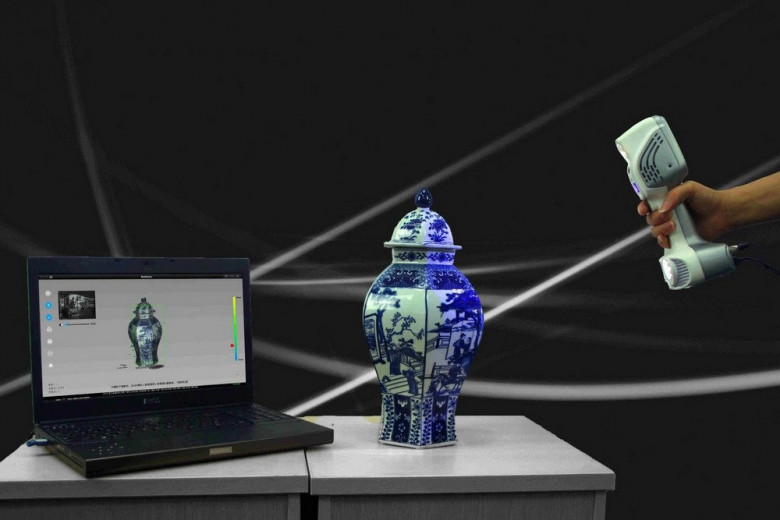
In recent years, the intersection of technology and entertainment has reached new heights, especially in the worlds of virtual reality (VR) and gaming. One of the most exciting innovations driving these advancements is 3d scanning. This cutting-edge technology is transforming how game developers and VR creators design immersive experiences, offering a more realistic, engaging, and interactive virtual world. But what exactly is the power of 3D scanning, and how is it revolutionizing these industries? Let’s take a deep dive into this groundbreaking technology and its impact on the gaming and VR landscapes.
What is 3D Scanning?
At its core, 3D scanning is a process that captures the physical dimensions of an object, environment, or even an entire scene. Through specialized equipment like laser scanners, photogrammetry, and other technologies, 3D scanning creates highly detailed digital replicas in the form of 3D models. These models can then be used in a variety of applications, from digital art creation to architectural design, but it is in virtual reality and gaming where its potential truly shines.
Enhancing Virtual Worlds with Realistic Environments
One of the most significant impacts of 3D scanning in VR and gaming is its ability to create hyper-realistic environments. Game developers can use 3D scanning to capture real-world objects and settings, which can then be recreated virtually with incredible detail. For example, a 3D scan of a real-life cityscape, building, or natural landscape can be transported directly into a virtual game world.
This approach significantly reduces the time and effort required to manually design environments from scratch. In turn, it allows for more accurate representations of the real world, making the virtual experience feel more immersive. Whether it’s the intricate textures of a forest, the precise architecture of an ancient building, or the fine details of an avatar’s clothing, 3D scanning enables a level of realism that was previously unattainable.
Real-World Scanning for In-Game Assets
In addition to environments, 3D scanning is also revolutionizing the creation of in-game characters and objects. Traditionally, game developers would model characters and objects from the ground up using software like Blender or Maya. While this method allows for high levels of creativity, it can be incredibly time-consuming.
With 3D scanning, developers can scan physical objects, people, or props, and instantly create digital counterparts. This significantly speeds up the development process and ensures that characters or items in the game look and feel incredibly lifelike. For instance, scanning an actor’s face allows for more realistic character models, while scanning physical props enables game designers to preserve every texture, crease, and nuance of an item.
Immersion and Interactivity in Virtual Reality
In the realm of virtual reality, immersion is key. The more realistic a VR experience feels, the more engaging and enjoyable it becomes. 3D scanning plays a crucial role in enhancing this immersion. By capturing the actual details of real-world objects and environments, VR developers can bring users closer to the feeling of being physically present in a virtual world.
Scanning for Personalized VR Experiences
Another exciting use of 3D scanning is in creating personalized VR experiences. Whether it’s scanning a player’s body to create a unique avatar or using the technology to scan and digitize a user’s room for a more interactive environment, 3D scanning helps VR developers create more tailored experiences. This level of personalization allows players to feel more connected to the virtual world, boosting their emotional investment and enjoyment.
The Future of 3D Scanning in Gaming and Virtual Reality
As the technology behind 3D scanning continues to improve, its applications in virtual reality and gaming are expected to grow even more sophisticated. With advancements in scanning techniques, we may see the ability to digitize entire environments or even real-time 3D scans that respond dynamically to the player’s movements. The potential for 3D scanning to enhance gameplay, storytelling, and interactivity is vast, and we’ve only begun to scratch the surface of what’s possible.
Conclusion
The power of 3D scanning in virtual reality and gaming cannot be overstated. It is reshaping how developers create worlds, characters, and experiences, enabling players to enjoy more realistic and immersive virtual environments. As technology continues to evolve, we can expect 3D scanning to play an even more central role in shaping the future of VR and gaming, bringing players closer to the worlds they’ve always dreamed of experiencing.
